
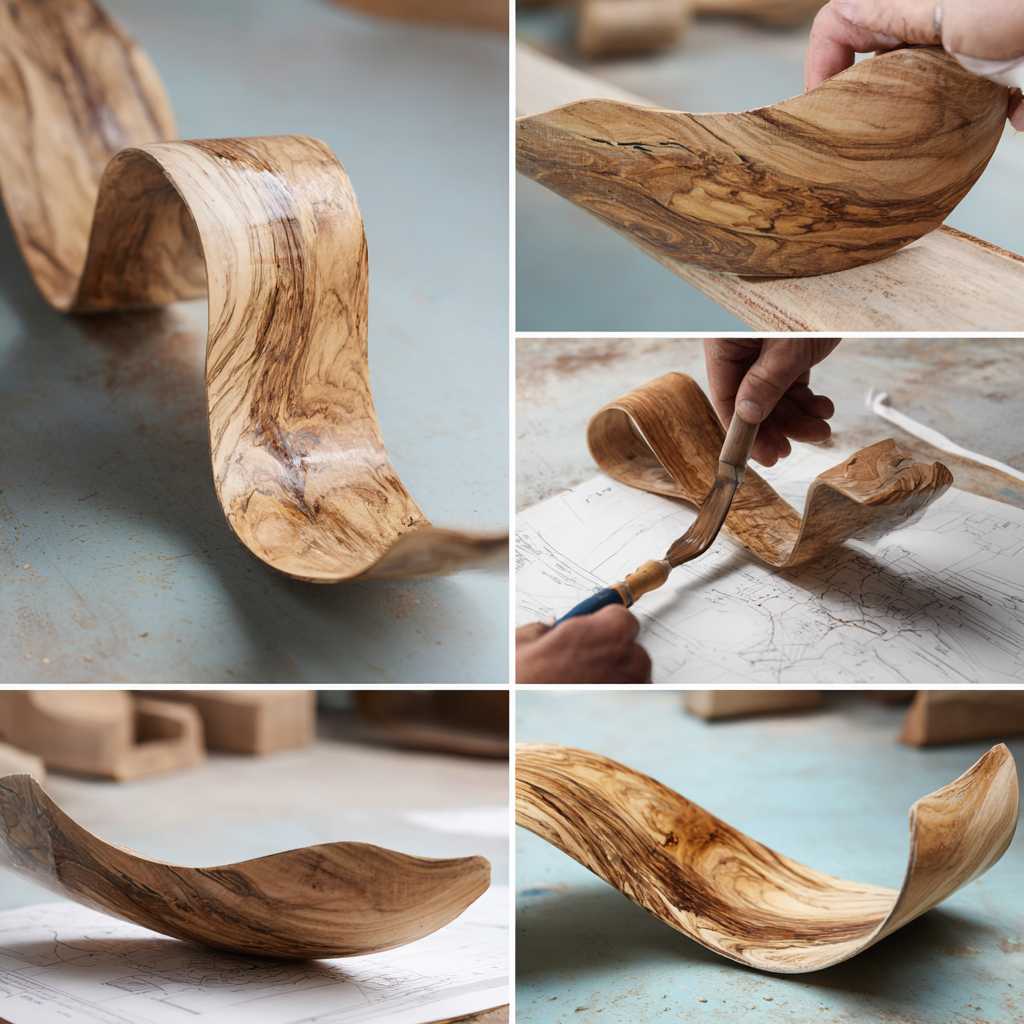
Wood bending is a traditional woodworking technique that allows craftspeople to create beautiful curved furniture, decorative pieces, and structural elements. While many methods require expensive equipment like steam boxes, there’s a surprisingly simple alternative hiding in your kitchen: vinegar. This natural acid can soften wood fibers, making them pliable enough to bend without specialized tools.
Why Vinegar Works for Bending Wood
Vinegar contains acetic acid, which breaks down lignin—the natural polymer that gives wood its rigidity. When wood fibers are exposed to vinegar, they become more flexible and easier to manipulate. This method works particularly well for thin pieces of wood and is ideal for craft projects, small furniture repairs, and decorative woodworking.
The vinegar method offers several advantages over traditional steam bending. It requires no specialized equipment, works at room temperature, and is safer for beginners. Plus, vinegar is non-toxic, inexpensive, and readily available in most households.
Best Woods for Vinegar Bending
Not all woods respond equally to vinegar treatment. Softer, more porous woods tend to absorb vinegar more effectively and bend more easily. The best options include:
- Oak: Highly flexible and commonly used in furniture making
- Ash: Excellent flexibility with beautiful grain patterns
- Birch: Bends smoothly and holds its shape well
- Pine: Softwood that’s perfect for beginners
- Maple: Harder but still workable for gentle curves
Avoid dense hardwoods like ebony or very brittle woods like cedar, as they may crack rather than bend even with vinegar treatment.
Materials and Tools You’ll Need
Before starting your wood bending project, gather these essential supplies:
- White distilled vinegar (5% acidity or higher)
- Wood piece (preferably 1/4 inch thick or less)
- Container large enough to submerge your wood
- Clamps or rope for securing the bent shape
- Form or mold for the desired curve
- Towels or rags
- Safety gloves
- Sandpaper (optional, for finishing)
Step-by-Step Guide: Bending Wood With Vinegar
Step 1: Prepare Your Wood
Start by selecting a piece of wood with straight grain and no knots, as these weak points can cause splitting during the bending process. Sand the wood lightly to remove any finish or coating that might prevent vinegar absorption. The wood should be clean and dry before treatment.
For best results, choose wood that’s no thicker than one-quarter inch. Thinner pieces bend more easily and require less soaking time. If you’re working with thicker stock, consider planing it down or selecting a more flexible species.
Step 2: Soak the Wood in Vinegar
Place your wood piece in a container and completely submerge it in white distilled vinegar. The soaking time depends on the wood’s thickness and density. As a general rule, thin pieces need 30 minutes to 2 hours, while thicker pieces may require 4 to 6 hours or even overnight soaking.
You’ll know the wood is ready when it feels noticeably more flexible when you try to bend it gently. The vinegar should penetrate throughout the wood’s thickness. For very thick pieces, you may need to flip the wood halfway through soaking to ensure even absorption.
Step 3: Remove and Blot Excess Vinegar
Once the wood has soaked sufficiently, carefully remove it from the vinegar bath. Use towels or rags to blot away excess liquid from both surfaces. The wood should be damp but not dripping. Work relatively quickly during this step, as the wood will begin to stiffen as it dries.
Wear gloves during this process to protect your hands from prolonged vinegar exposure, which can dry out skin.
Step 4: Bend the Wood to Your Desired Shape
This is the critical step where your project takes shape. Slowly and steadily bend the wood around your form or mold. Apply consistent, gentle pressure rather than forcing the bend, which could cause cracking or splintering. The wood should curve smoothly without resistance.
If you feel significant resistance or hear cracking sounds, stop immediately. The wood may need additional soaking time, or you may be attempting too tight a curve for that particular species and thickness.
For complex curves, work in sections rather than trying to create the entire bend at once. You can also heat the wood gently with a heat gun while bending to increase flexibility, though this isn’t necessary for most projects.
Step 5: Secure the Bent Wood
Once you’ve achieved your desired curve, immediately secure the wood in position using clamps, rope, or elastic bands. Make sure the wood is firmly held against your form to prevent it from springing back to its original shape. Check that clamps aren’t over-tightened, which could leave marks or create flat spots in your curve.
The wood needs to remain clamped until it’s completely dry. This drying process is what sets the new shape permanently into the wood fibers.
Step 6: Allow the Wood to Dry Completely
Leave the clamped wood in a well-ventilated area to dry thoroughly. This typically takes 24 to 48 hours, depending on the wood’s thickness, humidity levels, and air circulation. Thicker pieces or humid environments may require up to 72 hours.
Resist the temptation to remove clamps early. If the wood hasn’t dried completely, it will partially spring back to its original shape, ruining your work. You can test dryness by touching an area away from the form—it should feel completely dry and slightly cool to the touch.
Once fully dried, carefully remove the clamps. Your wood should maintain its new curved shape permanently.
Tips for Success
To achieve the best results with vinegar wood bending, keep these expert tips in mind:
Use fresh vinegar: Old or diluted vinegar loses acidity and won’t soften wood fibers effectively. White distilled vinegar with at least 5% acidity works best.
Test first: Always conduct a test bend with a scrap piece of the same wood species before working on your final project. This helps you determine optimal soaking time and feasibility.
Work with the grain: Bending wood perpendicular to the grain direction makes cracking much more likely. Always bend along the grain for best results.
Create gradual curves: Tight radius bends are more likely to fail. For sharper curves, consider laminating multiple thin layers rather than bending a single thick piece.
Control the environment: Dry wood in moderate humidity. Extremely dry conditions may cause cracking, while high humidity extends drying time.
Common Mistakes to Avoid
Even with straightforward instructions, wood bending can go wrong. Here are the most common pitfalls and how to avoid them:
Insufficient soaking time: Rushing the process by removing wood too early leads to cracking. When in doubt, soak longer rather than shorter.
Attempting bends that are too tight: Each wood species has a minimum bend radius. Pushing beyond this limit will cause failure regardless of preparation.
Using wood with defects: Knots, cracks, or irregular grain patterns create weak points that will fail under bending stress.
Removing clamps too soon: Patience during the drying phase is essential. Premature clamp removal wastes all your previous work.
Neglecting to create a proper form: Without a solid form to bend against, achieving consistent curves is nearly impossible.
Project Ideas Using Vinegar-Bent Wood
Once you’ve mastered this technique, numerous creative possibilities open up:
- Curved furniture legs: Add elegant curves to table or chair legs
- Decorative wall art: Create flowing, organic designs for wall hangings
- Picture frames: Design unique arched or circular frames
- Basket handles: Craft traditional curved basket handles
- Musical instruments: Build ribs for small stringed instruments
- Garden arbors: Construct decorative arched elements for outdoor structures
- Lampshade frames: Design custom curved frames for fabric lampshades
Vinegar vs. Other Wood Bending Methods
While vinegar bending is accessible and effective, it’s worth understanding how it compares to other techniques:
Steam bending uses high-temperature steam to soften wood. It works on thicker pieces and creates more dramatic bends but requires a steam box and heat source.
Laminate bending involves gluing multiple thin layers together over a form. This creates very strong bends but is more time-consuming and requires more materials.
Kerf bending uses strategic cuts on one side of the wood to allow flexing. It works for any wood type but leaves visible cuts that must be hidden or incorporated into the design.
Vinegar bending strikes an excellent balance for small to medium projects, offering simplicity and effectiveness without major equipment investment.
Finishing Your Bent Wood Project
After successfully bending and drying your wood, finishing touches complete the project. Lightly sand any rough areas with fine-grit sandpaper, being careful not to alter the curved shape. The vinegar treatment may raise the wood grain slightly, so sanding creates a smooth surface.
Apply your choice of finish—oil, varnish, or paint—according to your project needs. The wood will accept finishes normally after the vinegar has dried completely. Some woodworkers detect a faint vinegar smell initially, but this dissipates entirely within a few days.
Conclusion
Bending wood with vinegar is an accessible, affordable technique that opens up new creative possibilities for woodworkers at any skill level. By following these six straightforward steps—preparing the wood, soaking in vinegar, blotting excess moisture, carefully bending to shape, securing firmly, and allowing complete drying—you can achieve beautiful curved pieces without expensive equipment.
Start with simple projects using thin, flexible woods to build your confidence. As you gain experience, you’ll develop an intuition for soaking times, appropriate bend radii, and how different wood species respond to vinegar treatment. This ancient woodworking method, enhanced with modern understanding, brings professional-looking curves within reach of every craftsperson.
Whether you’re repairing furniture, creating decorative items, or exploring artistic woodworking, vinegar wood bending is a valuable technique to add to your skillset. Grab some vinegar from your pantry and start experimenting—you’ll be amazed at what you can create.