
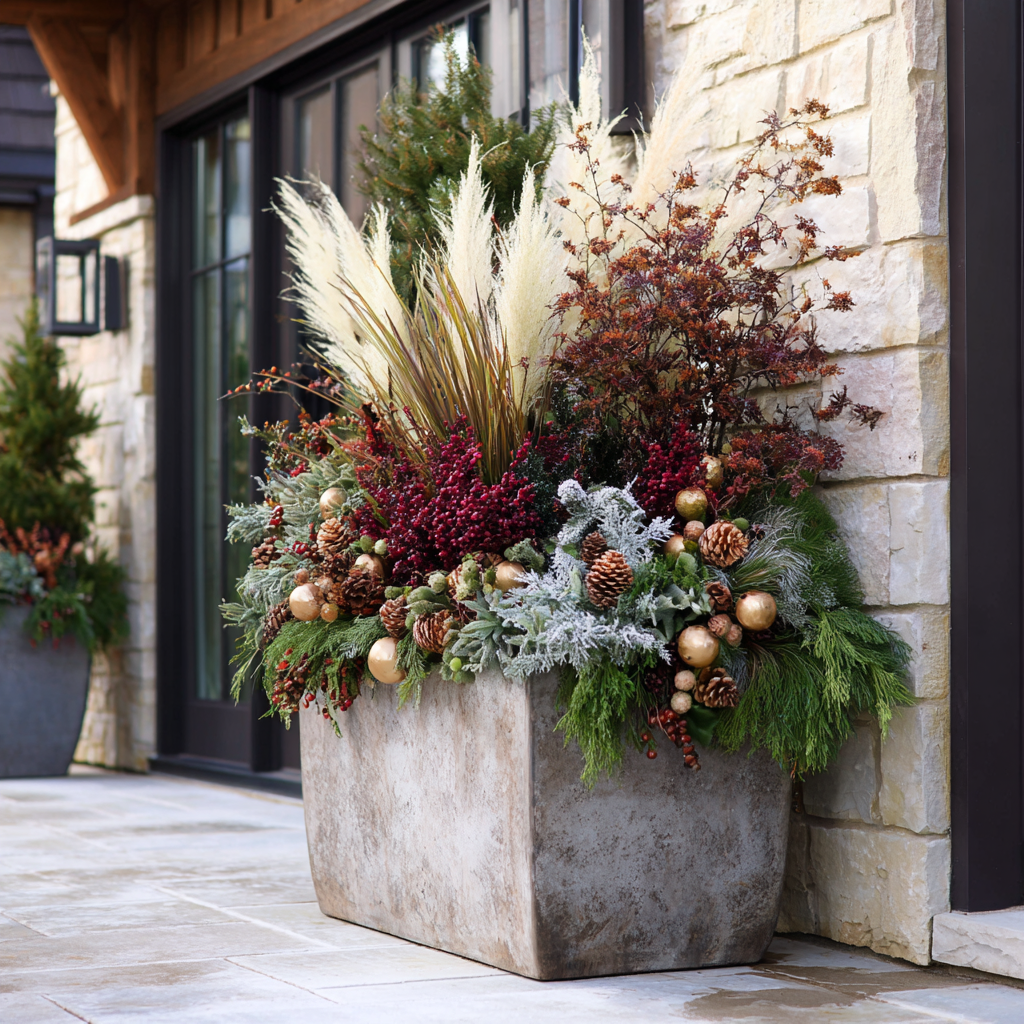
Welcome your guests with stunning outdoor Christmas planters that transform your entryway into a winter wonderland. These creative container designs combine evergreens, festive decorations, and seasonal elements to create eye-catching displays that withstand cold temperatures while spreading holiday cheer throughout the season.
Classic Evergreen Arrangements
Traditional Mixed Greenery Planters
Layer different textures of evergreen branches to create depth and visual interest. Combine blue spruce for color contrast, white pine for fullness, and cedar for aromatic appeal. Add noble fir branches for their elegant drooping habit and long-lasting needles. This traditional approach creates sophisticated containers that improve with age as the greenery settles naturally.
Tall Evergreen Spire Design
Create dramatic height by anchoring tall branches vertically in the center of large planters. Surround the base with shorter greenery and allow the tallest elements to reach upward like miniature Christmas trees. This design works especially well flanking doorways where vertical emphasis draws the eye upward and frames the entrance beautifully.
Layered Texture Combination
Mix various evergreen types with contrasting needle patterns. Pair feathery cypress with chunky pine, add wispy cedar tips alongside sturdy spruce branches, and incorporate boxwood for solid green foundation plantings. The interplay of different textures creates visual complexity that reads well from both near and far.
Berry and Branch Designs
Red Twig Dogwood Accents
Insert vibrant red twig dogwood branches vertically throughout your planter for dramatic pops of color. The brilliant crimson stems stand out against evergreen foliage and remain colorful throughout winter. These branches also attract birds seeking shelter, adding movement and life to your display.
Winterberry Holly Clusters
Incorporate stems loaded with bright red or orange berries into your arrangements. Winterberry holly retains its berries long after leaves drop, providing lasting color through the coldest months. Cluster several stems together for maximum visual impact rather than scattering them individually.
Curly Willow Statement Pieces
Add sculptural interest with curly willow branches that twist and spiral above the planter. Their architectural form creates dynamic lines that catch snow beautifully and add whimsy to traditional evergreen bases. Spray paint them gold or silver for extra glamour, or leave them natural for organic appeal.
Rose Hip Branches
Gather rose hip branches with their cheerful orange-red fruits still attached. These hardy additions survive freezing temperatures while providing food for winter birds. The smaller scale of rose hips offers delicate detail that complements larger design elements.
Decorative Embellishments
Oversized Ornament Clusters
Nestle weather-resistant outdoor ornaments in various sizes throughout the greenery. Choose a coordinated color scheme like silver and blue, traditional red and gold, or modern copper and white. Cluster odd numbers of ornaments together for the most pleasing visual composition, with the largest ornaments positioned lower in the arrangement.
Pinecone Groupings
Wire together clusters of natural or painted pinecones and nestle them among the branches. Dust them with artificial snow, leave them natural, or spray paint them metallic colors. Large sugar pine cones make impressive focal points, while smaller varieties fill gaps and add texture throughout.
Ribbon and Bow Accents
Thread weather-resistant ribbon through the greenery in cascading patterns or create generous bows as focal points. Choose wired ribbon that holds its shape despite wind and moisture. Buffalo plaid, velvet textures, and metallic finishes all translate beautifully to outdoor settings.
Sparkle and Light Elements
Wrap battery-operated string lights through the branches for evening magic. Add reflective elements like mirrored ornaments, glittered branches, or crystal icicles that catch daylight. These touches create movement and interest as light conditions change throughout the day.
Natural and Rustic Themes
Birch Branch Framework
Create structure using white birch branches positioned vertically or at angles. Their distinctive bark provides textural contrast against evergreens while evoking winter forests. Birch branches work particularly well in modern or Scandinavian-inspired designs.
Dried Hydrangea Elegance
Incorporate dried hydrangea blooms in muted tones of beige, mauve, and sage green. These faded flowers add romantic softness while their substantial size fills space beautifully. They withstand winter weather surprisingly well and develop even more character as frost touches them.
Natural Seed Pod Accents
Add lotus pods, milkweed pods, or teasel heads for organic sculptural elements. These botanical curiosities introduce unexpected shapes and create conversation pieces. Their neutral tones allow colorful ornaments and berries to shine while adding sophisticated detail.
Moss and Lichen Coverage
Cover the soil surface with sheet moss or reindeer moss for a finished, naturalistic appearance. This detail conceals mechanics while adding another layer of texture. The moss also helps insulate plant roots if you’re including live evergreens.
Modern and Contemporary Styles
Monochromatic White Winter
Create an elegant all-white scheme using white pine, frosted branches, white ornaments, and silver accents. Add white birch branches and bleached pinecones for textural variety within the limited palette. This sophisticated approach works beautifully with modern architecture.
Bold Color Blocking
Choose one vibrant color as your theme and commit fully. All-blue arrangements with blue spruce, sapphire ornaments, and silver accents create striking impact. Alternatively, try entirely gold with amber ornaments, gilded branches, and champagne-colored ribbon for glamorous appeal.
Minimalist Zen Design
Embrace simplicity with carefully selected elements positioned with intentional negative space. Three tall branches, a single ornament cluster, and one type of evergreen create calm, contemplative arrangements. This approach suits contemporary homes and modern sensibilities.
Geometric Pattern Play
Arrange branches and decorations in geometric patterns rather than natural formations. Create triangular compositions, linear rows, or circular groupings for design-forward displays. Use ornaments of uniform size and color for maximum contemporary impact.
Woodland and Wildlife Themes
Forest Floor Inspiration
Recreate woodland scenes with layers of evergreen boughs, birch bark pieces, pinecones, and faux mushrooms. Add small bird ornaments or nests for storytelling elements. This naturalistic style celebrates winter ecology while decorating festively.
Bird and Berry Sanctuary
Design planters that serve as actual bird feeding stations by incorporating real berries, seed heads, and suet ornament covers. Position the containers near windows for wildlife viewing opportunities while creating functional garden art.
Woodland Creature Accents
Tuck small deer figurines, cardinal ornaments, or woodland animal decorations among the branches. These whimsical touches delight children and add narrative interest. Choose realistic or stylized versions depending on your overall aesthetic.
Nest and Twig Details
Incorporate small natural nests (purchased, not taken from nature) filled with ornaments resembling eggs or berries. Add extra twigs and natural materials for authentic texture that birds might actually investigate during mild winter days.
Container Selection and Preparation
Classic Urn Planters
Large urns provide elegant foundations for substantial arrangements. Their curved forms and pedestal bases elevate displays literally and figuratively. Choose frost-resistant materials like fiberglass, concrete, or heavy-duty resin.
Vintage and Repurposed Containers
Convert old galvanized buckets, wooden crates, or metal washtubs into charming planters. The weathered patinas and rustic materials suit farmhouse and cottage styles. Ensure containers have adequate drainage or use them as decorative holders for plastic liner pots.
Modern Geometric Planters
Select cube, rectangular, or cylindrical containers in sleek materials for contemporary settings. Matte black, brushed metal, or concrete finishes provide sophisticated backdrops that allow the natural materials to take center stage.
Natural Baskets
Line woven baskets with plastic and use them as planter covers for casual, cottage-style displays. The woven texture adds warmth while remaining neutral enough to complement various design directions.
Step-by-Step Assembly Guide
Foundation Layer
Begin by filling your container partway with lightweight foam blocks, upturned nursery pots, or packing peanuts to raise the arrangement without excessive weight. Top with several inches of potting soil to anchor branches. If your container will remain outdoors all winter, ensure proper drainage to prevent waterlogging and cracking.
Primary Structure
Insert your tallest, sturdiest branches first to establish the overall shape and height. Position these structural elements slightly off-center for more natural, dynamic compositions. Angle some branches outward to create width and prevent top-heavy appearances.
Filling and Layering
Add mid-sized evergreen branches to fill gaps and create fullness. Work in a circular pattern, varying heights and angles for dimensional depth. Layer different greenery types to build texture and visual interest. Step back frequently to assess balance and symmetry.
Decorative Detailing
Once the greenery foundation is complete, add ornaments, berries, pinecones, and other decorative elements. Place the largest items first, then fill with medium and small details. Cluster similar items for impact rather than scattering them evenly.
Final Touches
Add ribbons, lights, or other finishing elements last. Ensure all components are securely attached to withstand wind. Water the arrangement if using live greenery, and mist occasionally throughout winter to maintain freshness.
Maintenance and Longevity Tips
Keeping Greenery Fresh
Mist evergreen arrangements every few days when temperatures remain above freezing. The moisture helps needles stay supple and prevents them from browning prematurely. Cut branches absorb water through their bark, so regular misting proves essential for longevity.
Weather Protection
Position planters in locations sheltered from harsh winds that dry out greenery and dislodge decorations. South-facing exposures may cause faster deterioration in late winter as sun intensity increases. Consider moving containers to covered porches during severe weather.
Ornament Security
Wire ornaments securely to branches rather than hanging them by strings that can break. Use floral wire, zip ties, or heavy-duty twist ties to ensure decorations remain in place despite wind, ice, and curious animals.
Refreshing Mid-Season
Replace any branches that brown or lose needles around mid-January. Trim off dried tips and add fresh sprigs to restore fullness. This quick refresh extends your display’s beauty through late winter without complete reassembly.
Color Scheme Inspirations
Traditional Red and Green
Embrace Christmas classics with combinations of red berries, burgundy ribbon, gold ornaments, and rich evergreen foliage. This timeless palette never goes out of style and coordinates with virtually any home exterior.
Winter White and Silver
Create elegant, sophisticated displays using frosted branches, white pine, silver ornaments, and pale blue accents. This cool palette evokes icicles and fresh snowfall while maintaining refined simplicity.
Rustic Copper and Bronze
Warm metallic tones pair beautifully with natural wood elements and evergreen greenery. Add copper ornaments, bronze pinecones, and rust-colored berries for displays that glow with earthy richness.
Jewel Tone Glamour
Deep purples, sapphire blues, and emerald greens create luxurious combinations that stand out against winter landscapes. Add gold or silver accents to enhance the regal quality of these rich hues.
Location-Specific Design Ideas
Entryway Flanking Pair
Create matching or symmetrical planters to frame your front door. Mirror the designs or use complementary arrangements that share common elements while offering slight variations. This balanced approach creates welcoming entries that feel intentionally designed.
Porch Corner Groupings
Cluster three or more planters of varying heights in porch corners for abundant, layered displays. Mix large floor planters with elevated plant stands and smaller accent containers for dynamic compositions that fill vertical space.
Window Box Transformations
Convert summer window boxes into winter displays using the same evergreen and decorative techniques. The elevated position showcases your creativity to both street-level viewers and from inside looking out.
Driveway Markers
Line driveways or walkways with a series of identical planters to create cohesive, welcoming pathways. Repeat elements ensure visual unity while the multiples create impressive impact through repetition.
Budget-Friendly Approaches
Foraging Natural Materials
Gather evergreen clippings from your own trees or with permission from friends and neighbors. Collect pinecones, interesting branches, and seed pods from nature walks. These free materials form the foundation of beautiful arrangements when combined thoughtfully.
Shopping End-of-Season Sales
Purchase ornaments, ribbon, and decorative elements during post-holiday clearances for next year’s planters. Store these items carefully and you’ll have premium materials at fraction of original costs.
Repurposing Indoor Decorations
Relocate weatherproof indoor ornaments to outdoor planters when your indoor tree comes down. The decorations enjoy a second showing while extending your holiday décor timeline without additional purchases.
DIY Embellishments
Create your own pinecone picks by wiring collected cones to skewers or branches. Paint plain branches in festive colors, or fashion bows from fabric scraps. Homemade elements add personal touches while controlling costs.
Transitioning to Early Spring
Removing Holiday Elements
After the holidays, remove ornaments, ribbons, and obviously Christmas-specific decorations while leaving the evergreen framework intact. The greenery continues providing winter interest through the coldest months.
Adding Winter Bloomers
Tuck in branches of winter-blooming witch hazel, wintersweet, or early forsythia as they begin showing buds. These additions bridge the gap between Christmas and spring while introducing new colors.
Incorporating Early Bulbs
Plant cold-hardy pansies, ornamental kale, or forced bulbs like paperwhites around the base of your arrangements in late winter. These living plants breathe new life into containers as they prepare for full spring transformations.
Conclusion
Outdoor Christmas planters offer endless opportunities for creative expression while welcoming guests with seasonal beauty. Whether you prefer traditional evergreen elegance, modern minimalist designs, or rustic woodland themes, these versatile containers adapt to any style and setting.
The key to successful Christmas planters lies in selecting quality materials, building strong structural foundations, and layering complementary textures and colors. With proper assembly and minimal maintenance, your outdoor containers will shine throughout the entire holiday season and beyond, proving that beautiful outdoor décor need not be complicated or expensive.
Start planning your containers now by gathering inspiration, collecting materials, and preparing your vessels. The creative process of designing these festive displays becomes its own enjoyable holiday tradition, and the resulting beauty greets you and your visitors every time you arrive home during the most wonderful time of year.